

Why Use Clicker Training for Rescue Horses?
Written for us by equine behaviour consultant Louisa Marais from TrulyTrust Equine.
Why do some equine rescue centres use clicker training in the rehabilitation process? What makes this approach different from pressure and release—and is it really better? Before we get into why clicker training can be a better method for rescue horses, let’s first clarify what it is and how it works.
What Is Clicker Training?
Clicker training is based on positive reinforcement—a completely different form of learning compared to traditional pressure-and-release methods. Positive reinforcement means the horse learns through the addition of a reward to increase the frequency of a desired behaviour in the future. Pressure doesn’t play any part in the process.
Contrary to popular belief, positive reinforcement isn’t just for tricks. It can be used to teach anything—from standing still for medical procedures to complex dressage movements. Within this method, the clicker becomes a communication tool. It’s introduced early on and teaches the horse that when it hears the click:
- It has done something right and the trainer wants more of that behaviour.
- A reward (usually food) will follow immediately.
This timing allows the trainer to clearly communicate which behaviour is desired, teaching the horse without ever needing to apply pressure. A halter or lead rope isn’t necessary—just a clicker and a reward. This simplicity makes it especially effective for horses recovering from trauma.
Why Use a Different Approach for Rescue Horses?
Rescue horses often have a long history of negative experiences with humans, making traditional pressure-based methods risky. Applying pressure—even light discomfort—can trigger the FEAR response. For horses with high FEAR levels, this can quickly become unsafe for both horse and handler.
Pressure also involves tools such as whips, halters, or ropes—all of which may have negative associations for rescued horses. A different, gentler approach keeps stress low, ensures safety, and helps with necessary medical care during rehabilitation.
How Can Training Be Approached Differently?
The training phase of rehabilitation requires us to:
- Recognize what causes stress.
- Avoid triggers that aggravate it.
- Train in ways that build trust and reduce fear.
- Later, reintroduce equipment gradually to change old associations.

Recognizing Stimuli
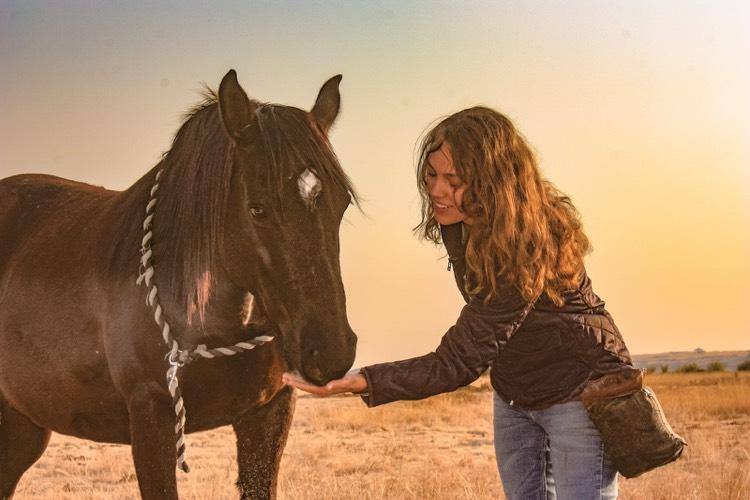
Once we understand what stresses a horse, we can avoid triggers and begin to build a positive relationship. Positive reinforcement reduces unnecessary stress and encourages “feel-good” emotions. Horses begin to see their new human caretakers as helpers, not threats—allowing physical and emotional healing.
Why is clicker training ideal for rescue horses?
- It effectively rehabilitates traumatized horses.
- It keeps handlers safe.
- It helps horses heal from emotional trauma.
- It’s one of the most ethical approaches to training.
- It brings joy to both human and horse.
It can be a long, challenging process, but it’s always worth it. Learn more on the TrulyTrust website or explore Louisa’s Equine Academy course on rescue and “problem” horses.
A Short Video of Emma and Quarentino in Action
“Positive reinforcement is when the individual learns through the addition of a reward to increase the frequency of a desired behaviour in the future.”
Thank You, Louisa!
Thank you so much to Louisa for writing this insightful post for us. If you’d like to contribute an article, contact us at tenerifehorserescue@gmail.com.