This week’s “How to with Lola” is about how to feed a horse in the best way.
The correct feeding of our horses is essential for their recovery and rehabilitation. This is why, as a refuge, we get advice from the best professionals on the subject. This time we interview Maria Duran Navarro, equine nutritionist at Nutra Horse, who gives us her insight on how to feed a horse properly.
A bad diet can cause different diseases in our equine friends. To prevent them, it’s important to focus not on brands, but on the nutrients each horse needs for a healthy life — depending on its characteristics and activity level.
Nutra Horse
Nutra Horse specializes in advanced clinical horse nutrition. Its mission is to offer a healthy and balanced diet tailored for each horse, because every horse has unique demands.
“Wild horses travel long distances to meet their needs for forage, water, and mineral salts… In this journey, hundreds of varieties — including herbs, trees, shrubs, fruits, seeds, and roots — provide the horse with a diversity of nutrients, sometimes difficult to achieve with domestication.”
That’s why the human hand must step in to provide the nutrients horses would naturally find in the wild. Here’s some information provided by Maria Duran Navarro.
What basic nutrients do horses need?
Basically, the same as other mammals — but with one major difference: the horse’s digestive system gets most of its energy from fiber fermentation, unlike other monogastrics like us.
The diet must include daily water, protein, structural carbohydrates (fiber), fats (for vitamin absorption), vitamins, and minerals — in proportions that depend on each horse’s condition. Water and minerals are essential nutrients.
What does each nutrient contribute?
Protein is the most abundant substance after water. It’s part of muscles, bones, cartilage, hooves, hormones, tendons, and neurotransmitters.
Vitamins act as cofactors in energy metabolism and support cellular and biochemical functions.
Minerals regulate blood pH, hydration, muscle contraction, nerve impulses, and antioxidant response — vital for many body processes.
Fats are necessary for absorbing fat-soluble vitamins, forming cell walls, maintaining skin health, producing hormones, and supplying energy.
Fiber makes up around 60% of the horse’s energy (from forage). It maintains intestinal flora and helps produce B vitamins and fatty acids critical for health.
Water is vital for hydration, digestion, organ function, and blood pressure regulation — making up about 70% of a horse’s body.
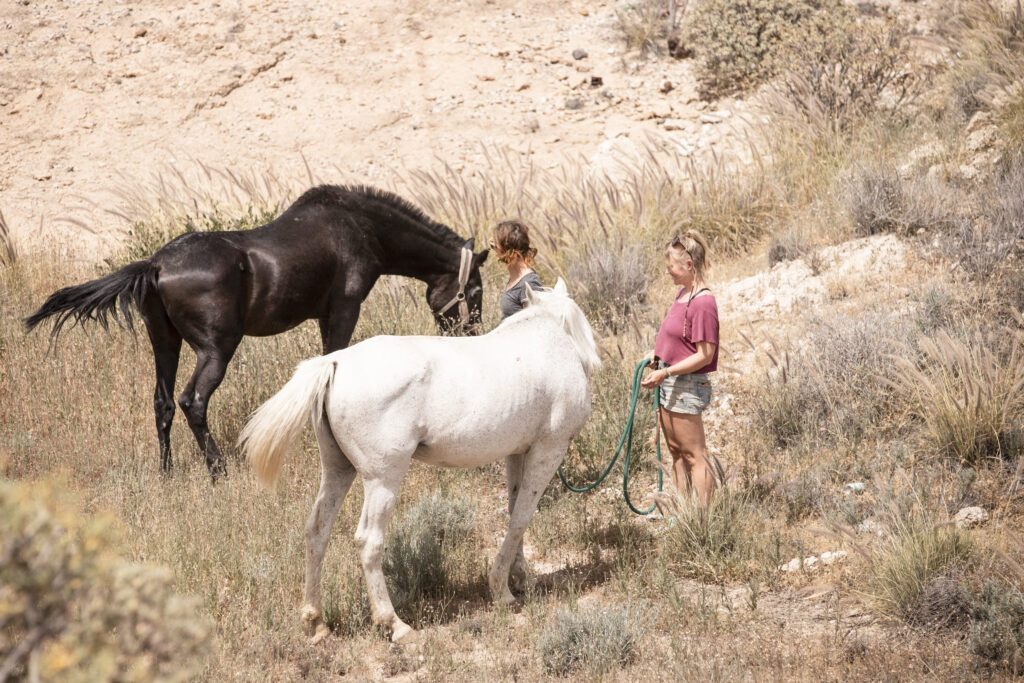
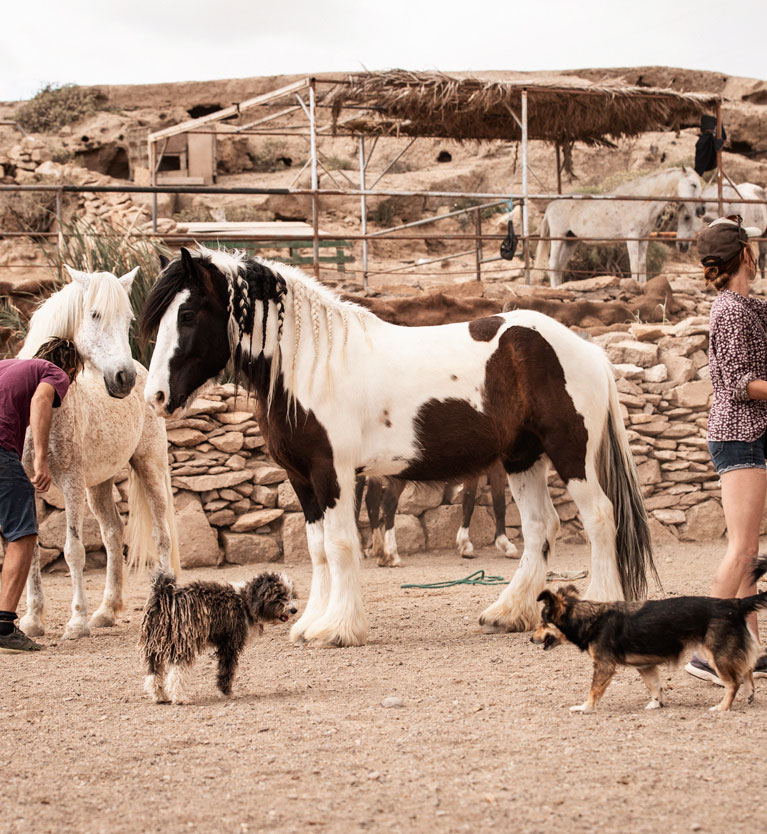
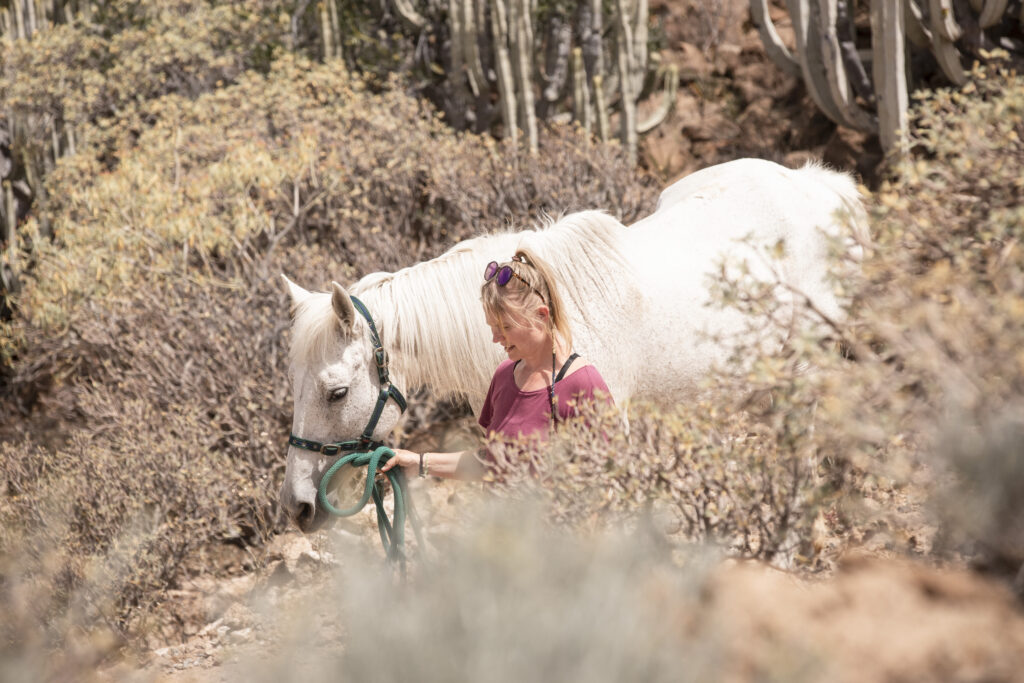
Feeding our horses at Tenerife Animal Sanctuary
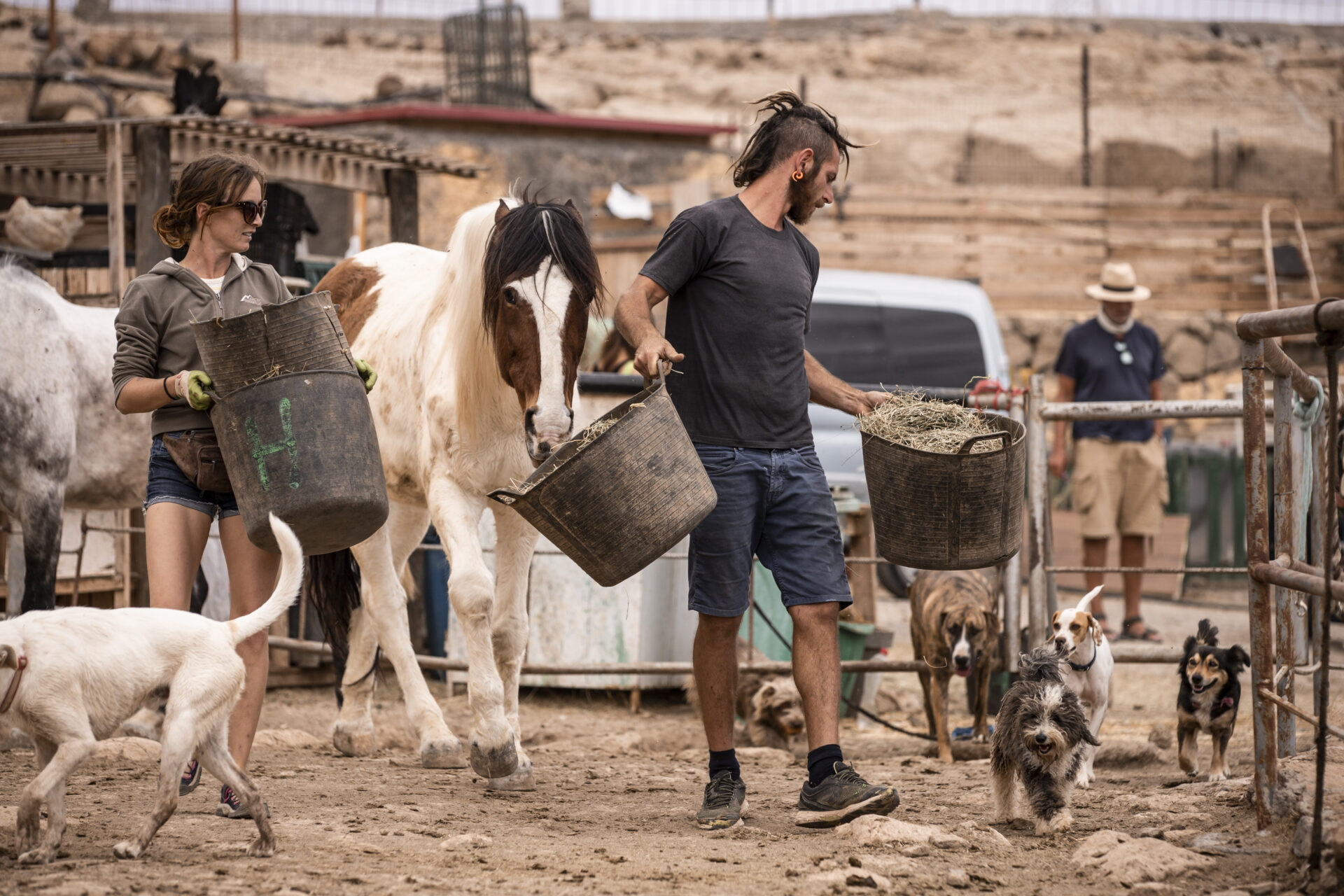
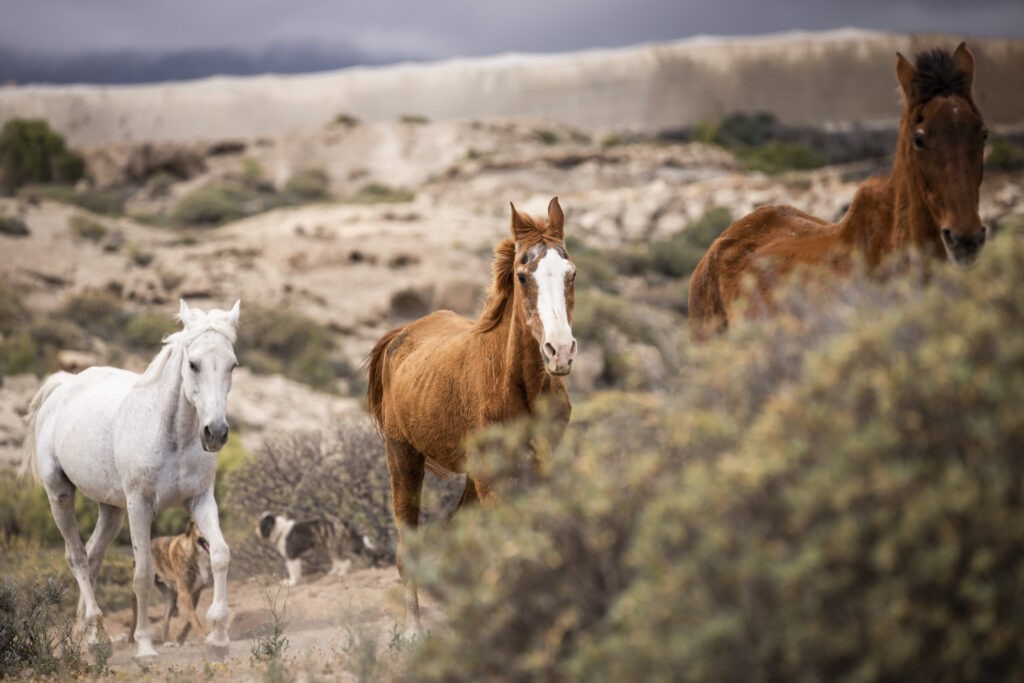
Our refuge is located in southern Tenerife — a dry, volcanic area with no natural grasslands. Therefore, we offer a varied diet to compensate for the lack of grazing. Most of our horses are in rehabilitation and need supplements and special care.
Emma, one of the founders, shares how we feed our horses:
“Here we have our horses on a very natural and grain-free diet. As our horses are retired from competitive lives and most are in light exercise, we give good quality roughage to form their diets. Being on a volcanic island comes with challenges — quality hay and forage are imported, so we supplement with alfalfa and hay cobs for calorie and nutrient balance.
Access to fresh water and a mineral/salt lick is a priority. As advocates of barefoot horses, our diet also reflects this. A diet full of cereals and additives won’t promote optimum hoof health — which is vital for our horses on this harsh terrain.”
What are food supplements?
Back to Maria: Supplementation means adding extra nutrients beyond the usual diet — to fill any gaps or target specific conditions. Needs vary with age, breed, workload, health, and season. Supplements should always be formulated to improve the horse’s condition, recovery, or performance when deficiencies exist.
How does feeding differ between working and retired horses?
Retired horses have very different requirements from those in regular exercise. Both need the same nutrients, but in different amounts. Working horses need more energy, minerals, vitamins, and protein to fuel movement and repair muscle tissue — as well as to counteract free radicals and maintain performance safely.
What about jumping or racing horses?
Jumpers and racehorses make maximum effort for short bursts — mostly anaerobic. Their energy comes from glucose rather than oxygen-based metabolism, meaning they need more non-structural carbohydrates (starch and sugars) to sustain glycogen levels. Heat-treated cereals (except oats) are recommended for efficiency and to avoid colic, but forage must still form the base of the diet.
How to choose the right products?
Always look for clean, fresh-smelling products with quality raw ingredients, processed properly, and packaged to prevent moisture and light damage. Cheap feed often means low quality ingredients — and while expensive isn’t always better, quality always has a cost. A good nutritionist can help you identify reliable sources.

If you’d like, Emma can explain in detail what, why, and how we feed our horses for optimal barefoot health and gut rehabilitation. Comment below if you’d like us to write that blog post. Big thanks to Maria for taking the time to share her expertise with Lola for this week’s edition of “How to Feed Horses.”
Source: Tenerife Animal Sanctuary