I’m Joanne and I’m a volunteer here at Tenerife Horse Rescue. I’m sort of from the UK, sort of from France but I consider myself a citizen of the world. I spent over a year in Asia, mostly Goa, and that’s where I first learned about the benefits of being part of a community. That’s what attracted me to the finca — doing something good with like-minded people and the opportunity to learn. There’s an abundance of that here.
I was warned about the living conditions but I love my cave. The people here are all interesting, and every day I’m learning something new. What I found was more than a horse and animal rescue sanctuary — it’s a sustainable community and eco-project built on permaculture principles and homesteading.
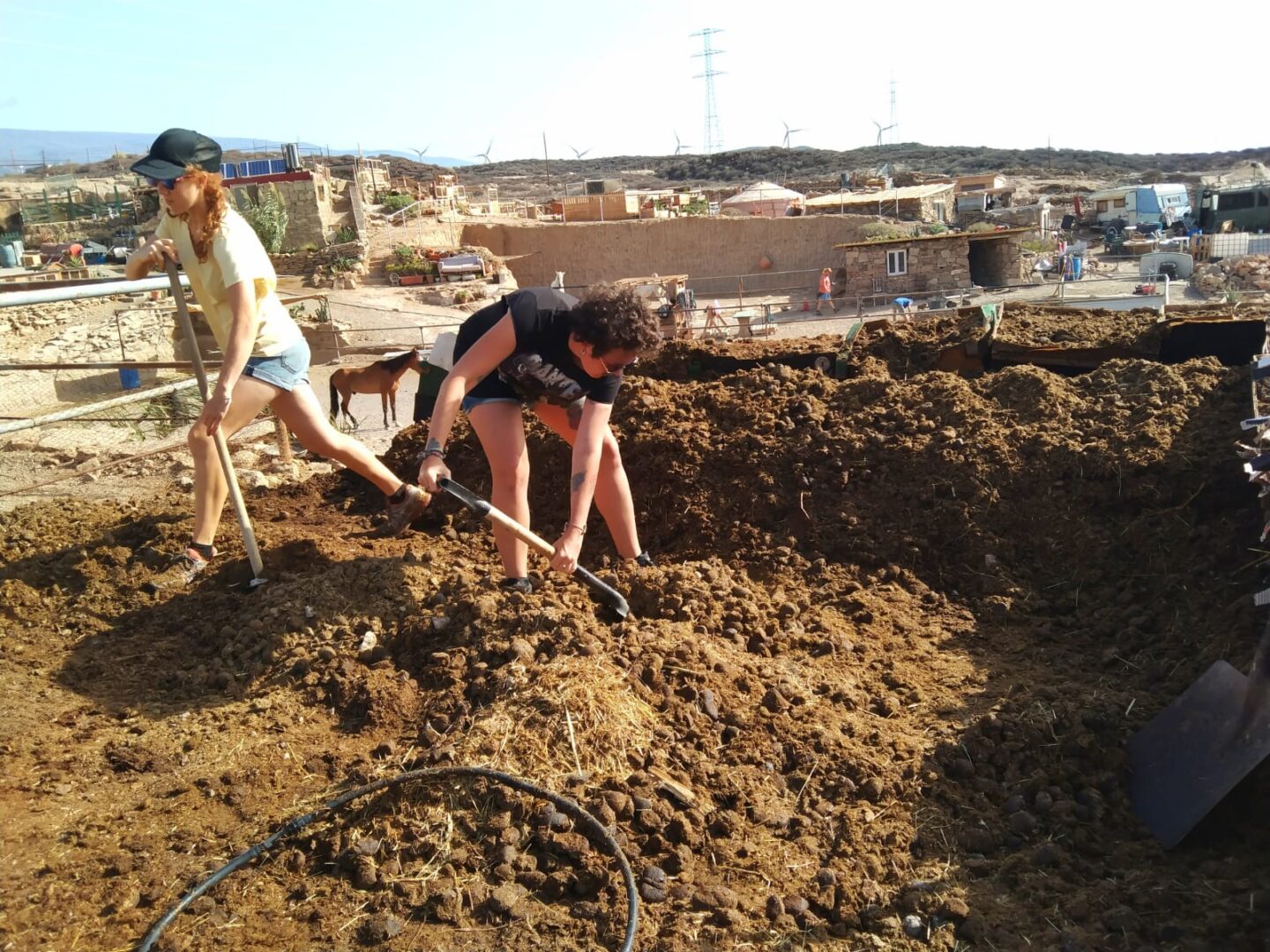
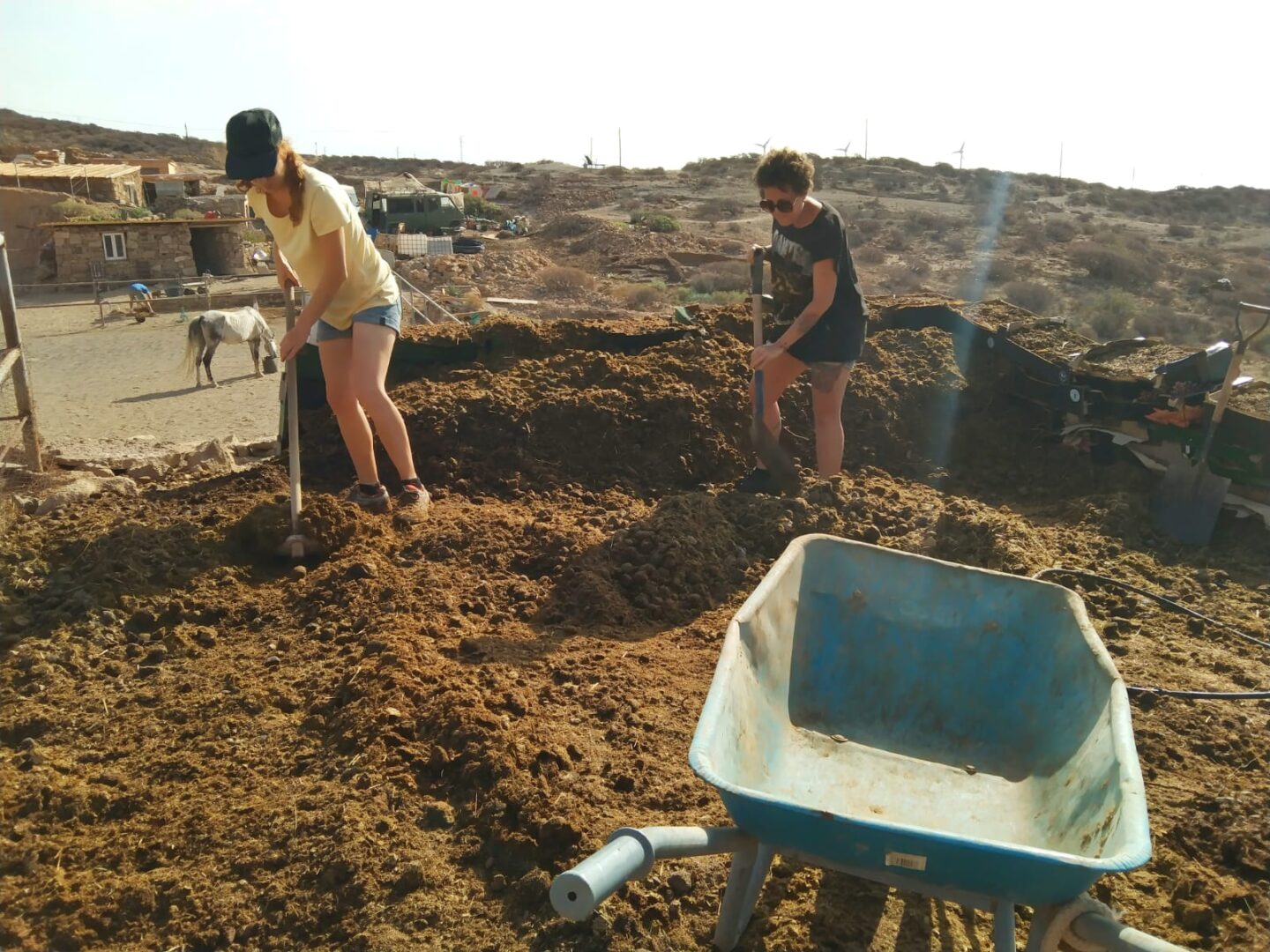
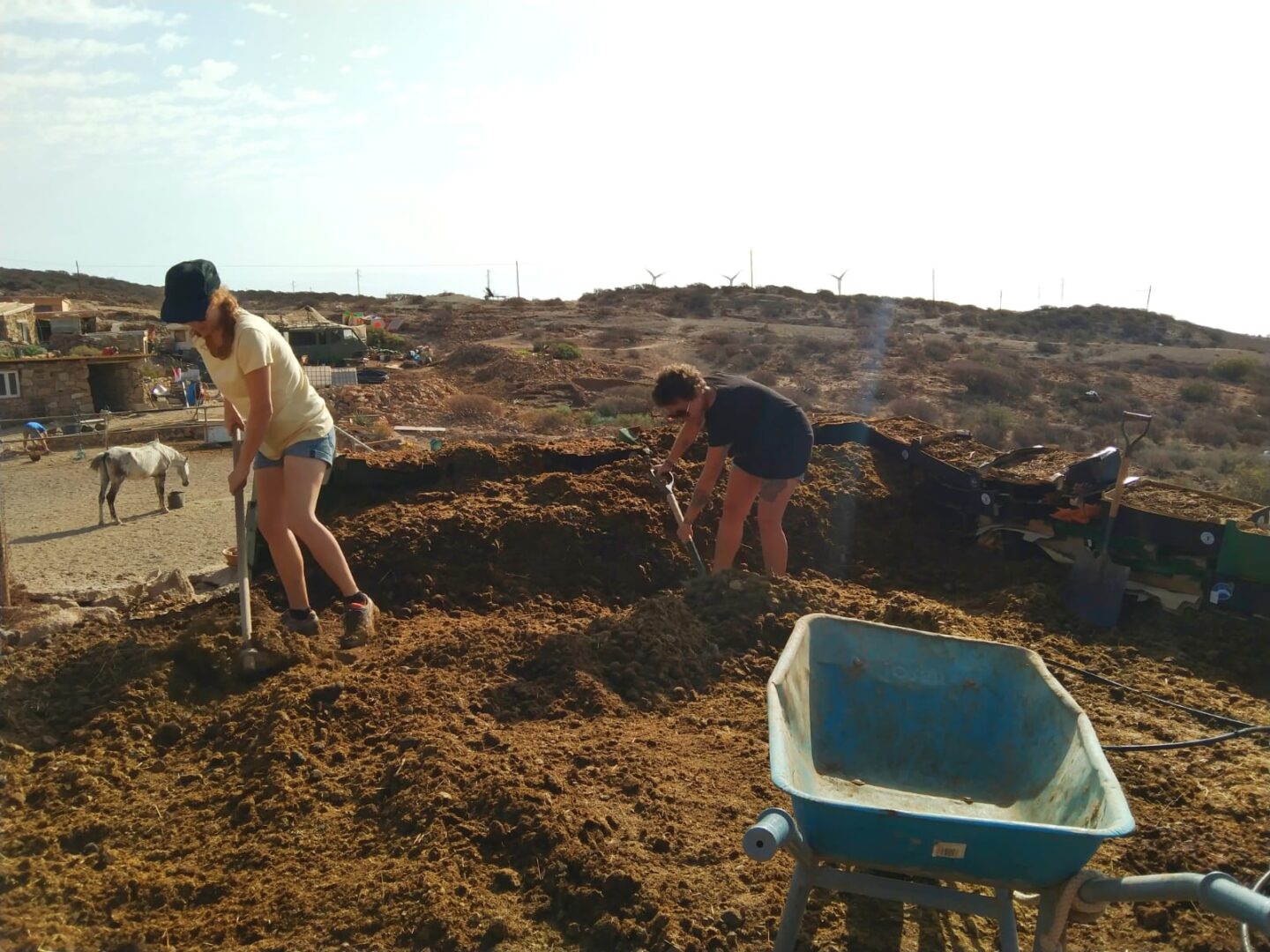
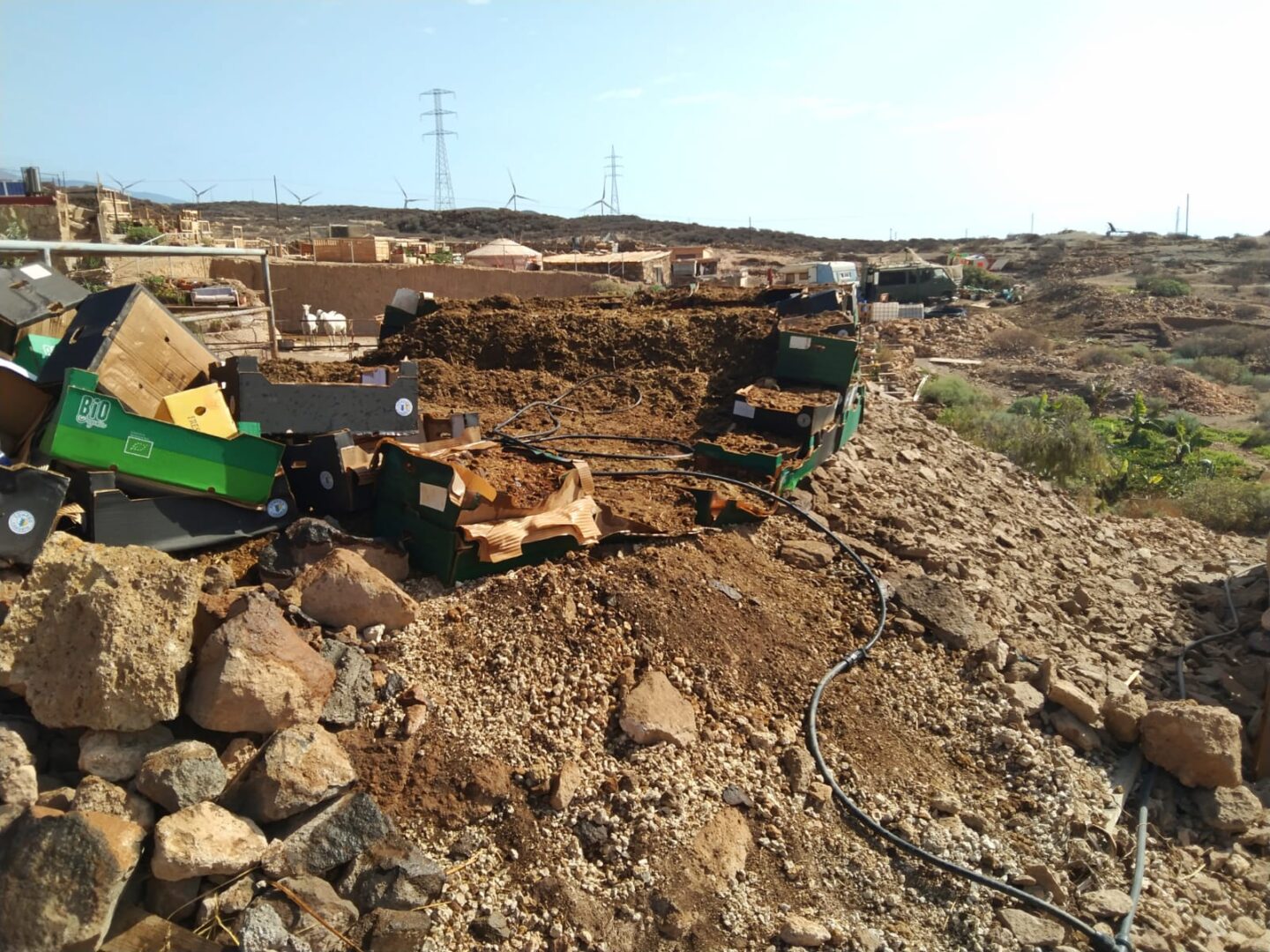
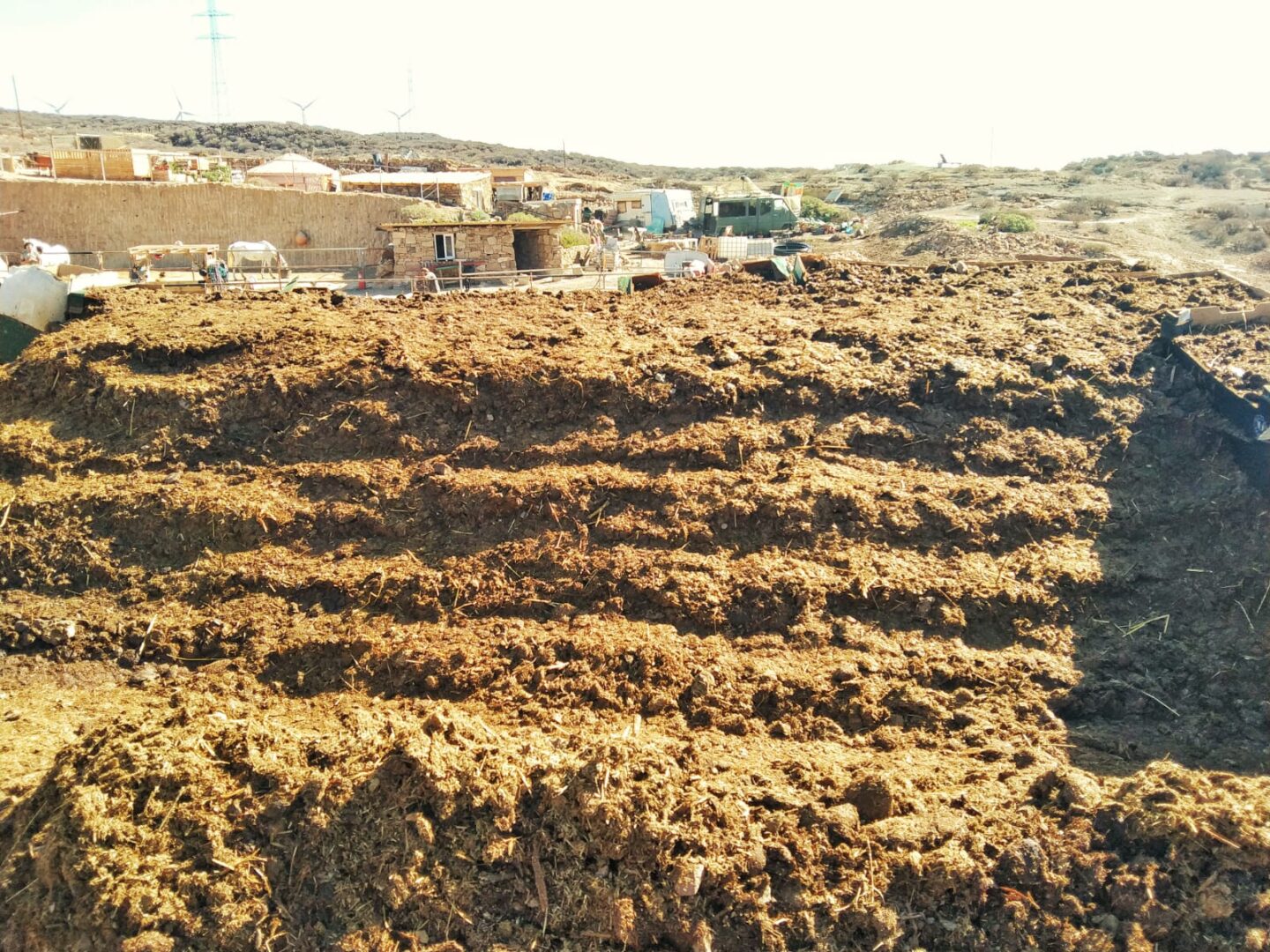
I was asked to help with manure composting for a new planting area, and got stuck in straight away. We affectionately call it “the shit wall” but the science behind it is pretty solid. We are off the coast of North Africa on a rocky island, but we grow vegetables — thanks to utilising our most valuable resource as a horse sanctuary: manure. Our food is either home-grown here on the finca or donated by local businesses. Whatever we don’t eat goes to the animals, and our horses give us enough manure to go back into the soil to grow more. It’s the circle of life!
It’s been so rewarding watching it take shape — working outside in the morning sun and learning how valuable natural resources are. I was never much for science at school, but seeing it in action has been amazing. Speaking of which, here comes the science part…
The Composting Process
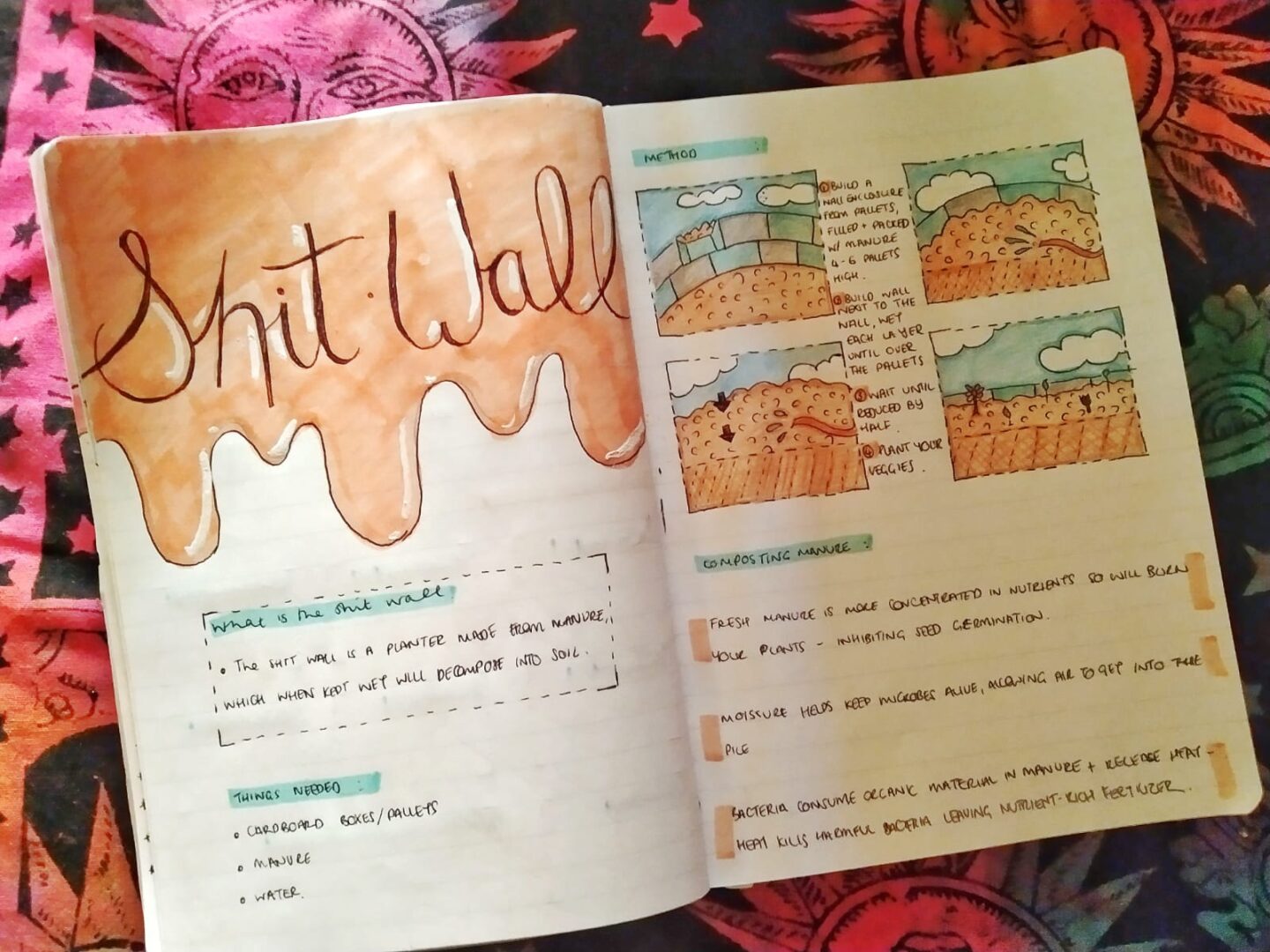
Composting manure is a fairly long process. The first step is filling cardboard boxes with manure to build a wall (hence “shit wall”) and creating an enclosed space. Fresh manure is layered against the wall until it’s over the pallets and wet. Every layer needs to be soaked, as moisture keeps microbes alive and lets air into the pile. After the initial build, it takes 2–6 months depending on the climate and nutrient quality in the manure. Fortunately, our horses have a healthy diet, full of hay and nutrient-rich veggies!
The wall should reduce by half before planting. This allows the chemical reactions to complete — bacteria consume organic material, releasing heat that kills harmful bacteria, leaving nutrient-rich fertilizer for crops.
Life in the Finca
Sure, I’m covered head to toe in manure every day and the windy conditions mean a healthy amount ends up in my hair, but I genuinely enjoy building. I can’t wait to watch it reduce and see vegetables growing on it. It’s pushed me to learn more about permaculture, gardening, and projects that require getting my hands dirty. I’ve learned that building is empowering, especially as a woman — even if it’s just a wall of manure!
There’s something about being out in nature, contributing to it in a cyclical way, and really getting involved in the finca lifestyle. It’s oddly exciting watching everyone build their own projects while having mine too. My friends now ask me about “the shit wall” before asking how I am — it’s gone global and I’m okay with that!
It’s also shown me a new way of living — working with nature instead of against it. Everything you need is around you, and you can get essentials without creating waste. It’s symbiotic. Maybe humanity wouldn’t face so many issues if we lived more sympathetically with our environment. Being self-sufficient matters to me, and I think I can set the foundation for that here at the finca.
The Joy of Community
Living around animals and working with talented, curious people is humbling. We work hard, have fun, and there’s a deep sense of contentment in the community. I hope manure composting is just the beginning — I’m learning so much, and it feels like I’ve found the perfect place to absorb knowledge and contribute to something real.