By Tamara from Madrid — currently volunteering with us at Tenerife Horse Rescue.
Every horse lover has wondered how wonderful it would be to work in a horse sanctuary or rescue centre. It’s written in our skin to help heal an animal we’re fascinated by. Nonetheless, the reality is quite different — to rehabilitate horses that have been mistreated, abused, neglected, or starved requires more than love and cuddles. Awareness, science, and knowledge become allies — this golden combination guarantees proper welfare and well-being for any animal.
The horses at this sanctuary all have different stories, and each approach must be personal and individual. Studies show that horses have personalities as unique as people. Some are strong-minded, others affectionate, and some arrive completely shut down. To save them, all we can do is care, give them time, and hope for the best.
As an equestrian, I’ve seen many training methods and tools. We’re not here to say that if you use a bit or whip, you’re doing it wrong. But as the horse must be trained, the rider also needs training before using powerful equipment responsibly. Luckily, we have resources to ensure we don’t create trauma that lasts forever.
A horse’s memory is unique — short-term memory lasts seconds, but long-term memory endures. And yes, they remember bad experiences more than good ones. We use that understanding positively. Horses learn through Operant Conditioning (Skinner, 1938): they associate a behaviour with a consequence. Through target and clicker training — based on positive reinforcement — horses learn that what we ask isn’t harmful and that good behaviour brings rewards. Once they grasp this, traumatized animals gain confidence — a vital first step before moving forward.
The Case of Quarentino
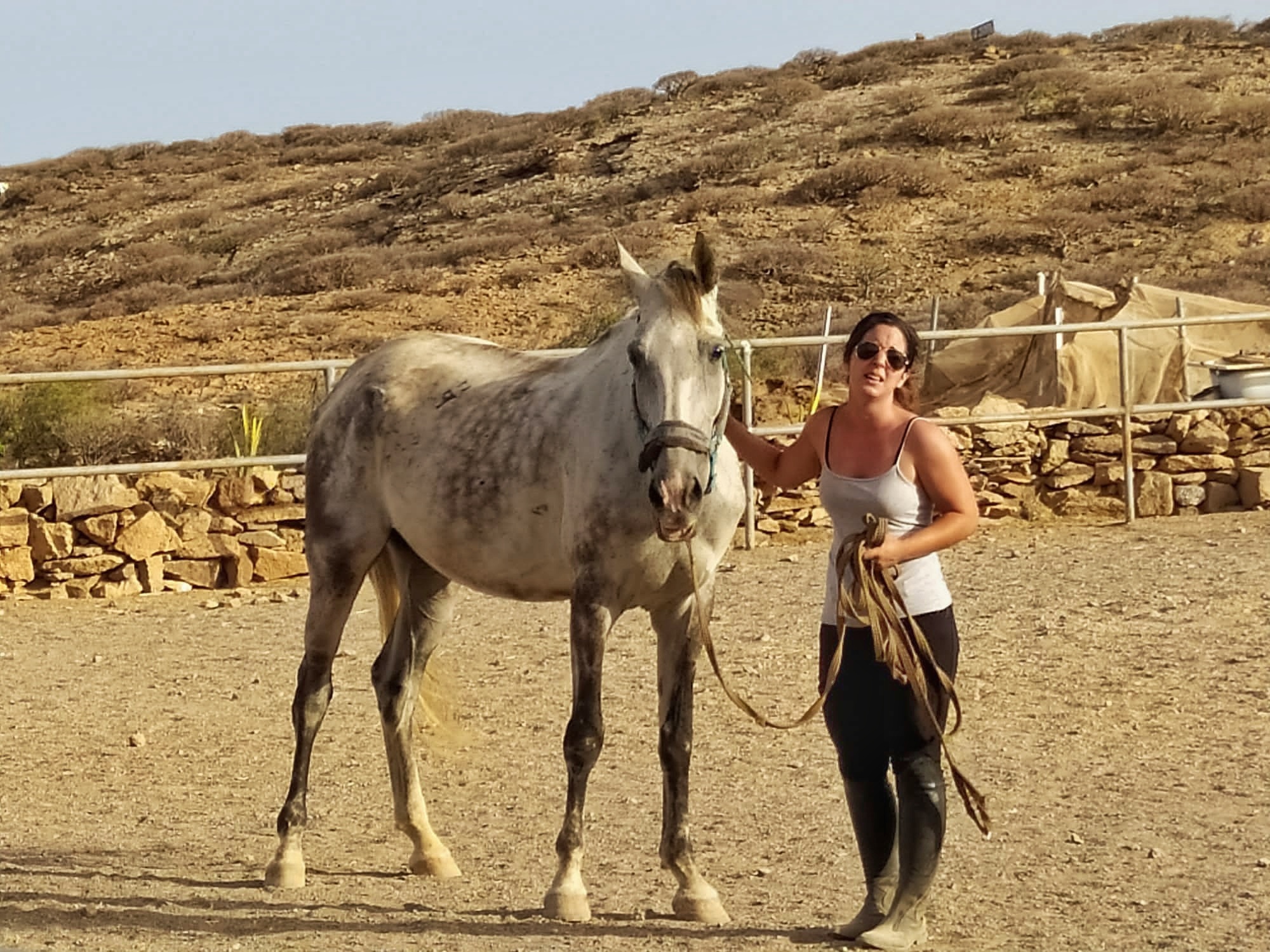
Quarentino spent seven years alone in a stall, handled only by force. He would show stress just from someone entering his space. Here at the sanctuary, we used target training to help him gain confidence and leave his comfort zone. After two months, Quarentino now stands among other horses, welcomes human contact, and accepts gentle touch. Patience and positive reinforcement healed his mind — and I’m proud to have been part of his journey to happiness.
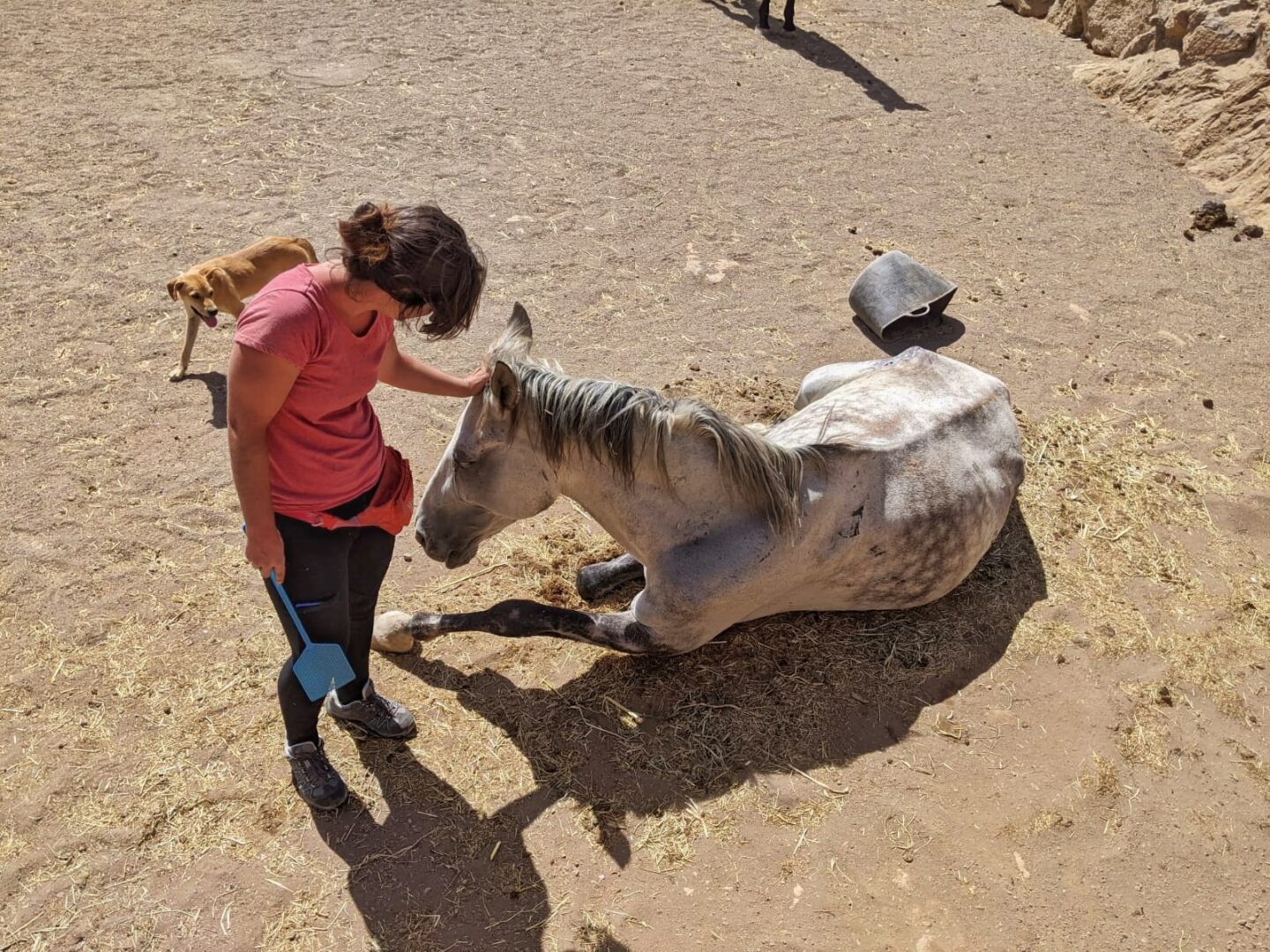
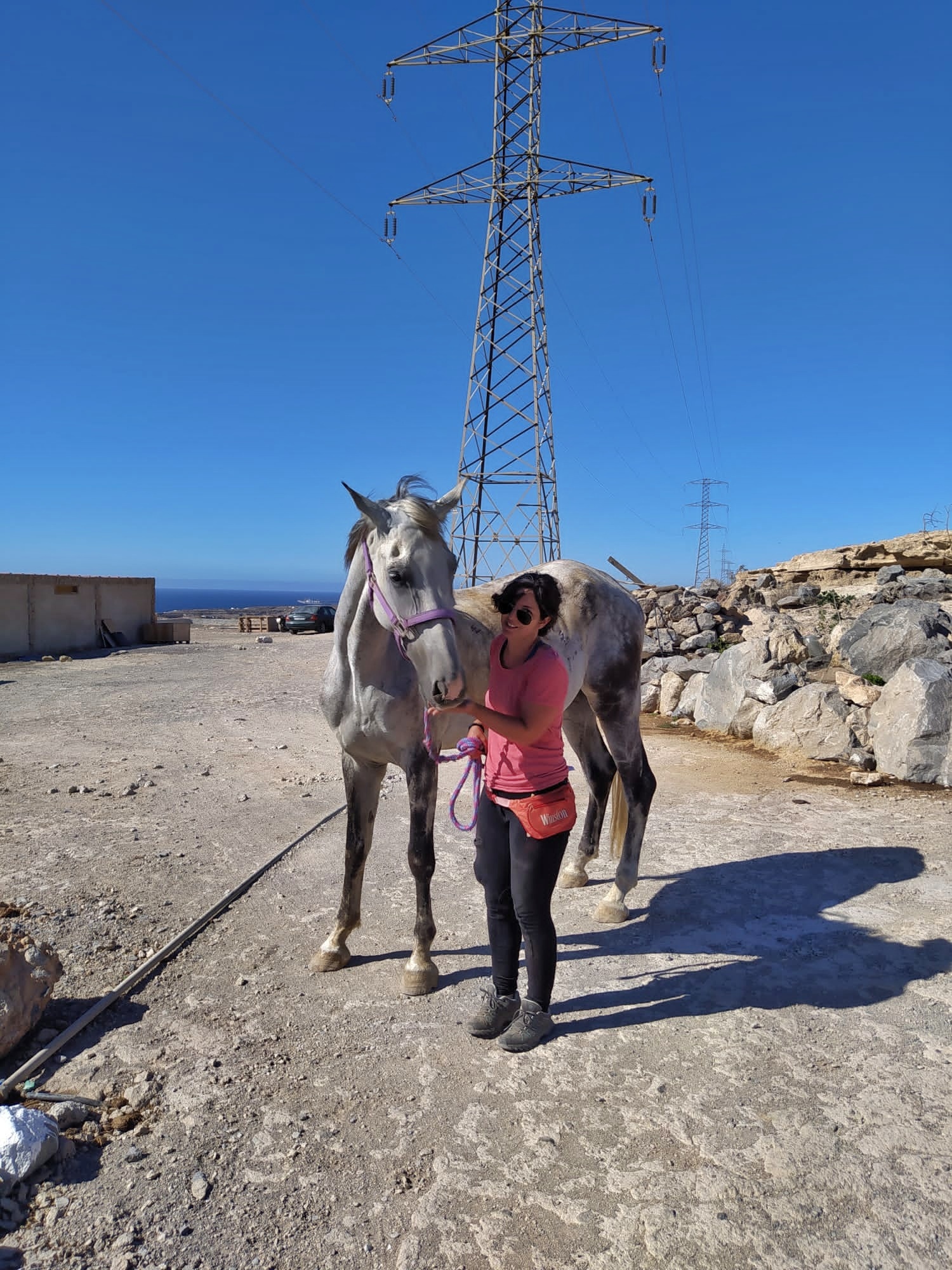
Healing horses isn’t just about rescuing their bodies — it’s about restoring their trust. Every horse like Quarentino reminds us that patience, respect, and empathy can truly heal from the inside out.